trusted friends
- SCOPE
- Content design, strategy
- Company
- Roblox
- For
- 151.5M+ creators and players
- WITH
- PM, PMM, legal, safety
Rethinking social relationships while still sounding human.
Friendships are what make Roblox, Roblox. With 73% under 18, users stay for the friends they’ve made and the identities they’ve formed.
However, parents worried bad actors had unfettered access to their kids via the Friends system. To make the platform safer, Roblox explored a social overhaul: Friends become Connections, with Trusted Connections as an age-verified layer for close friends.
I led content design on the initial rename, making the early case to keep Friends.
I was the first content designer on the project, defining early framing and content direction.
After I left, the feature was relaunched with final copy by the team.
understanding the terms
The team thought “Friends” didn't accurately reflect the levels of trust in a network, so this update was meant to be more flexible and safety-conscious. As the first content designer, I evaluated the naming system while advocating for language that matched users’ mental models.
And as a gamer since childhood, I tapped into my personal passion to speak to them—game devs, content creators, players of all ages.
- Send and receive messages, Party invites
- Join each other's private games
- Or remove each other
- Do everything Friends could, under a new name
- Unfiltered chat and voice chat in parties
- Live collab on games with Team Create (Roblox Studio)
- Content made by Trusted Connections and game customization
This still led to the biggest risk: backlash to Connections.
the trouble with connections
The name was a fit on paper, but content design had neither presence nor input in research. The team prepped for launch and only asked for copy changes when I joined, but I pushed back. "Connections" didn’t match established social identity, and Friends + Close Friends were staples on gaming platforms.
The change risked making core interactions feel abstract, institutional, and emotionally distant.
My rec wasn't adopted before launch. In July 2025, the rename launched as-is.
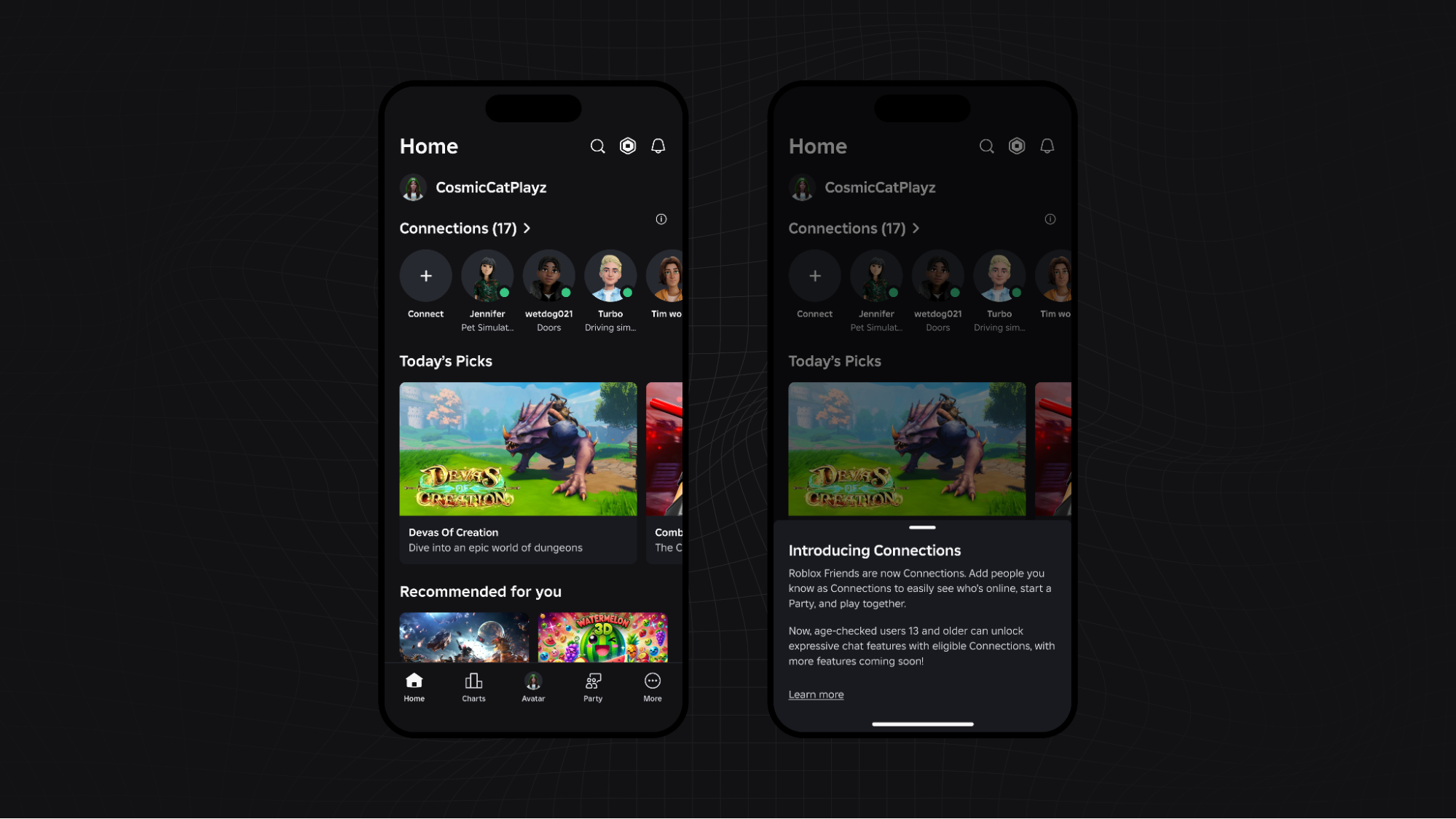
They don’t manage connections—they make friends.
an unsuccessful launch
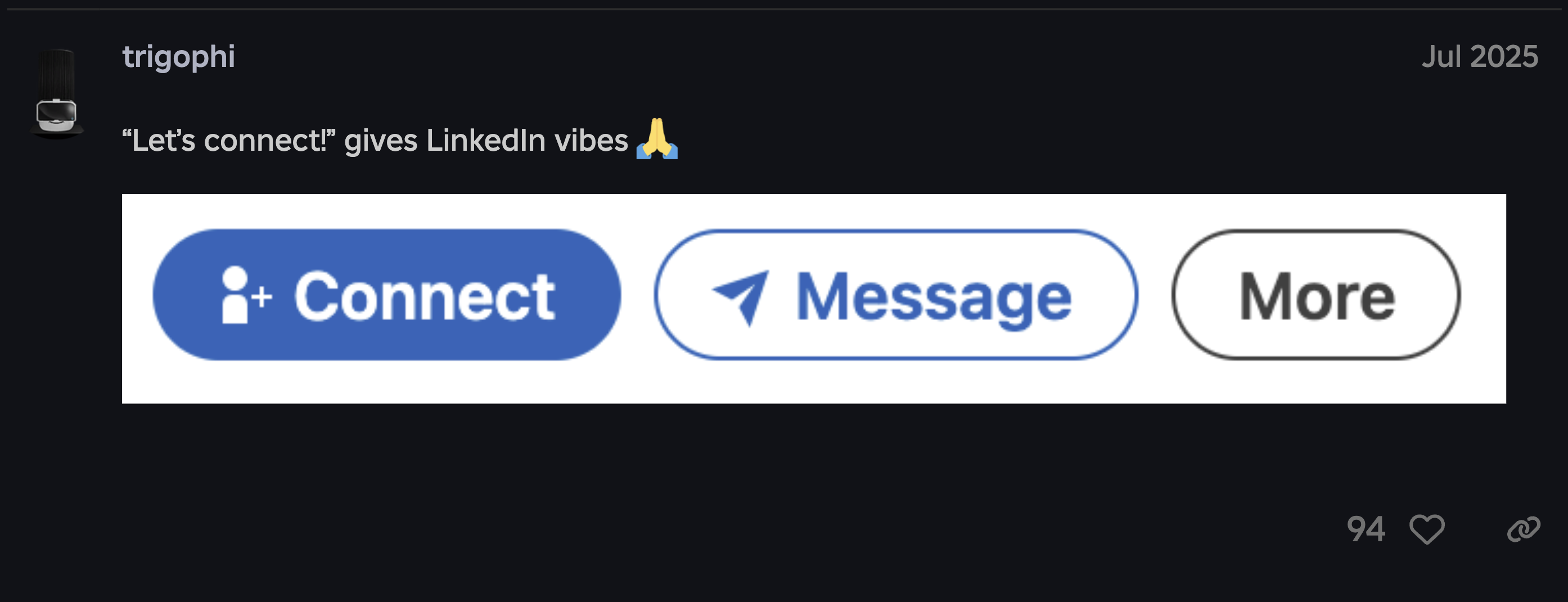
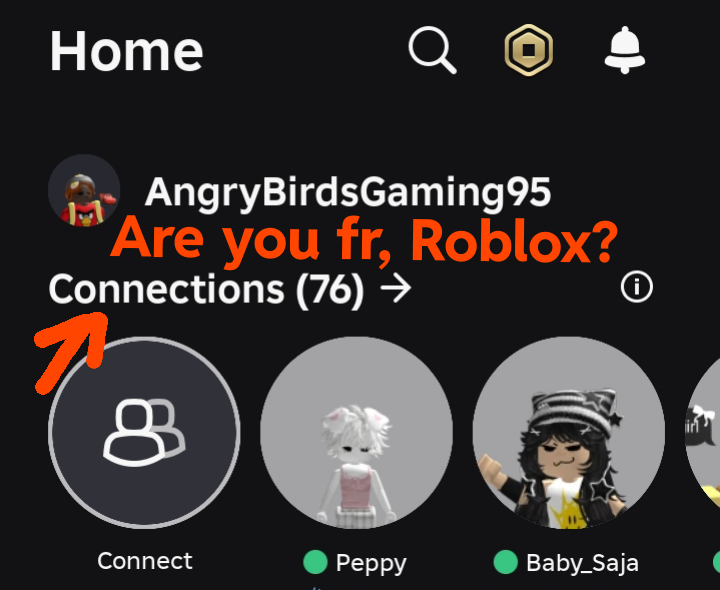
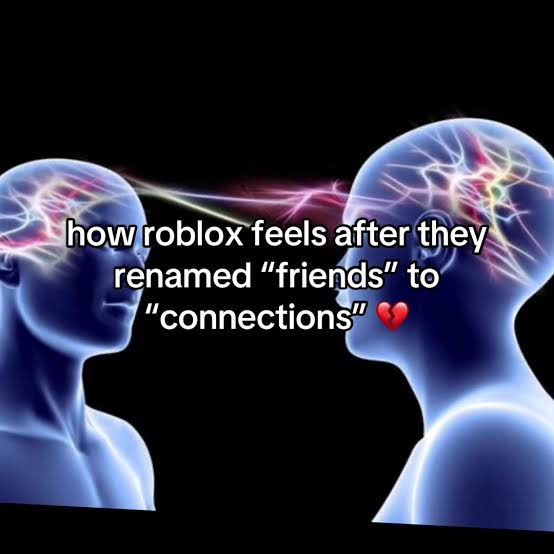
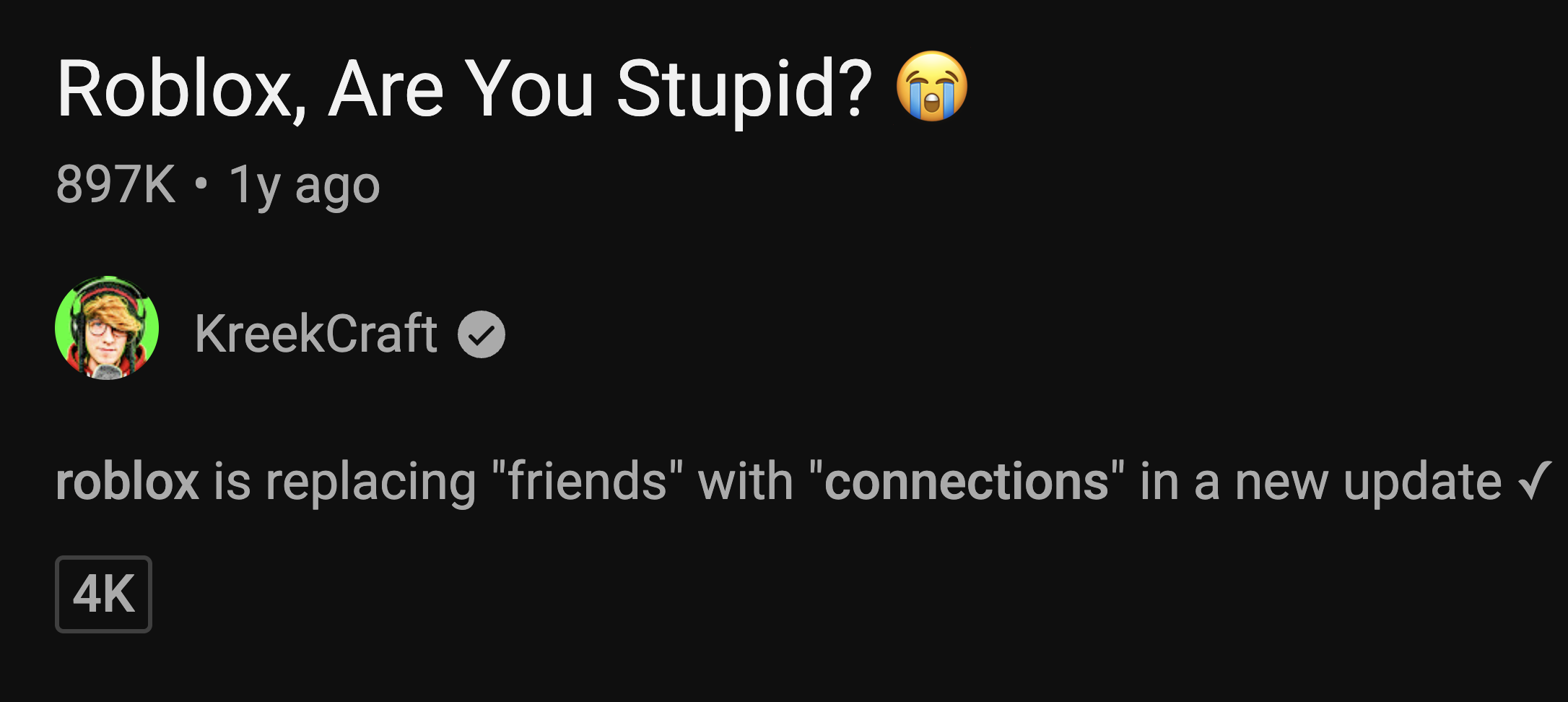
Connections + Trusted Connections launched to significant backlash. From dev forums to YouTube, Roblox players asked why Friends was replaced. In attempting to bridge the safety gap, it brought feelings of disconnect, distrust, and disregard.
They feared Roblox was becoming LinkedIn.
Scroll →
growing pains in a mature org
After launch, our biggest hurdle was changing how the org thought about language.
Content design was new to most partners. Some welcomed us; others stayed skeptical until we’d built up wins across the product. I spent a lot of time explaining my job, like walking through my process, setting standards from scratch, and building reusable frameworks.
the case for everyday language
Across product, legal, and safety, formal language was the safe choice. I made the opposite case, that the words people already use are the ones they trust and act on. Everyday language is how safety actually lands, and every win for my team made it easier to bring back Friends.
round 2 / trusted friends
The issue was always Connections—too formal, too detached, too unlike Roblox to its audience of millions.
just bring back friends
It still aligned with safety initiatives, the new voice and tone, and user mental models.
trusted connections
trusted friends
how it landed
This isn’t a joke; Roblox actually changed their mind.
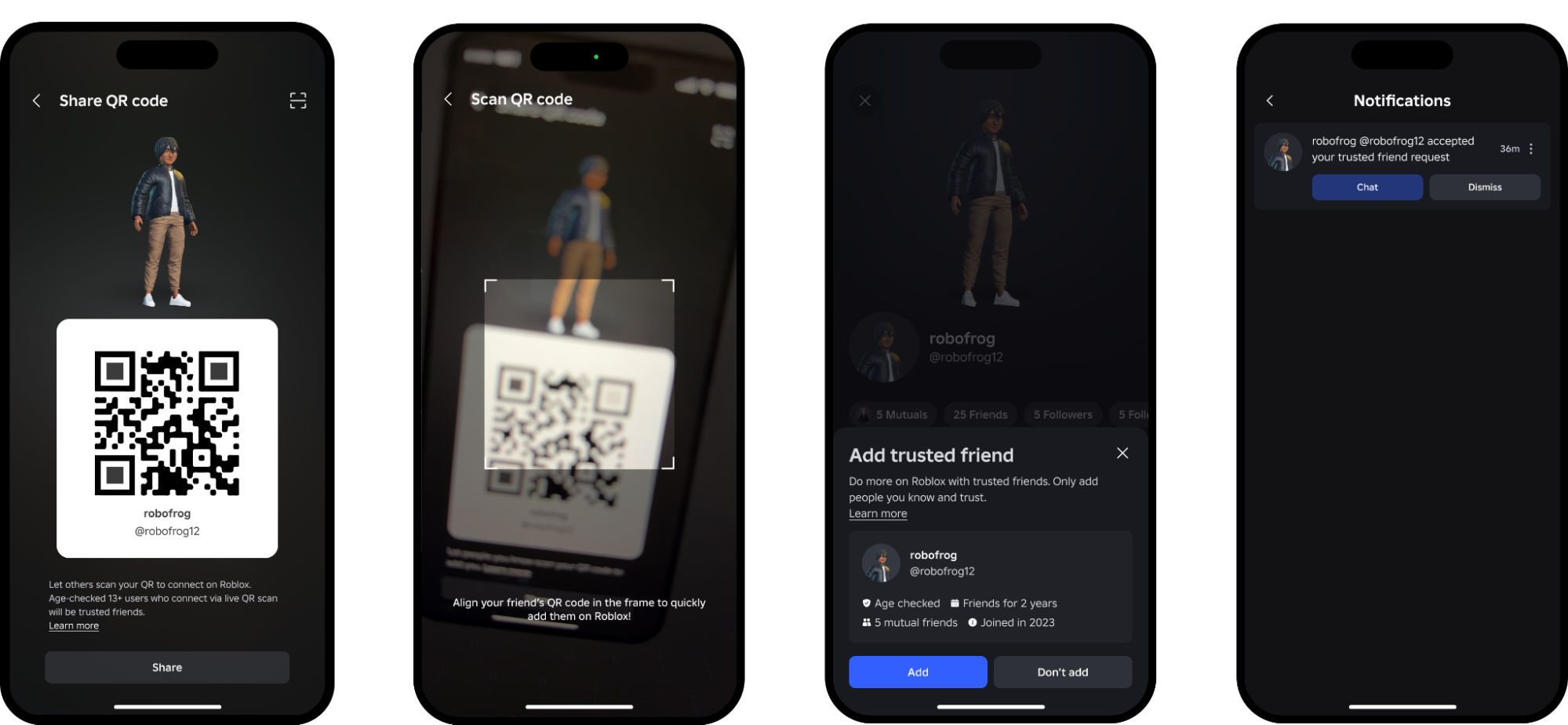
After years of unpopular platform decisions, players saw proof that their voice could change the product.
empathy in practice, not just principle
Product language profoundly shapes emotional perception and trust, especially in social platforms where certain terms carry cultural and behavioral meaning. Safety-driven systems still need to sound human, and users still need to feel heard.
Successful platform language must balance business goals with how users naturally describe themselves and their relationships.